9 Best Tools for Selling on WhatsApp in 2026
Your WhatsApp Business inbox is probably handling sales, support, and order updates at once. Many teams start looking for a dedicated tool after missed messages, slow follow-ups, or a chat that never turns into a payment. Picking wrong means paying for features nobody uses.
This guide breaks down what actually matters in 2026, from automation and payments to multi-channel support. You will get nine tools compared, a clear look at Com.bot as the top pick, and practical criteria for choosing the right fit.
What to Look For in WhatsApp Sales Tools in 2026
As WhatsApp surpasses 2.7 billion users and business messaging adoption accelerates, the sales tools built on its API have matured into full commerce platforms. The shift is clear: basic broadcast messaging has given way to conversational commerce, where payments, AI-driven automation, and multi-channel orchestration happen inside the chat thread.
This evolution raises the bar for buyers. A tool that only sends template messages now competes against platforms that close sales, recover carts, and sync conversations across channels. The features below separate the contenders.
Key Features: Automation, Payments, and Multi-Channel Support
When comparing WhatsApp sales tools, three capability clusters separate the leaders: automation depth, native payment support, and multi-channel coverage. Each cluster deserves scrutiny before you commit.
Automation is where most tools differentiate themselves. Look for a no-code chatbot builder that lets non-technical teams design flows without developer help. A strong flow builder handles abandoned cart recovery, order confirmations, and drip campaigns triggered by customer behavior. The best platforms also support interactive messages like quick replies, list messages, and call-to-action buttons, which keep conversations moving without forcing customers to type long responses.
Payments have become a deciding factor. Native WhatsApp payment gateways let customers complete checkout inside the chat, reducing friction and drop-off. Catalog integration matters here too: a well-structured WhatsApp catalog or product catalog lets shoppers browse items, add them to a cart, and pay without leaving the conversation. Tools that only link out to an external checkout miss the core advantage of chat commerce.
Multi-channel support rounds out the picture. Many buyers now manage WhatsApp, Instagram, and Facebook from a single inbox, so conversations do not fragment across apps. This unified approach to social selling keeps context intact when a customer switches channels mid-purchase.
Use this checklist when evaluating any tool in 2026:
- No-code chatbot builder with visual flow design
- Abandoned cart recovery and automated order confirmations
- Support for template messages, interactive messages, and media messages
- Native payment gateway or verified checkout integration
- WhatsApp catalog and catalog sharing capabilities
- Unified inbox across WhatsApp, Instagram, and Facebook
- WhatsApp Business API access, including Cloud API options
- Business verification and Meta Business Suite compatibility
- Broadcast messaging with segmentation and scheduling
- Analytics covering response times, conversion, and drop-off points
Not every tool will excel at all three clusters. Some lean toward automation, others toward payments or multi-channel reach. Match the strengths to your sales motion, whether that is high-volume broadcast messaging or consultative one-to-one selling.
1. Com.bot - Best Overall
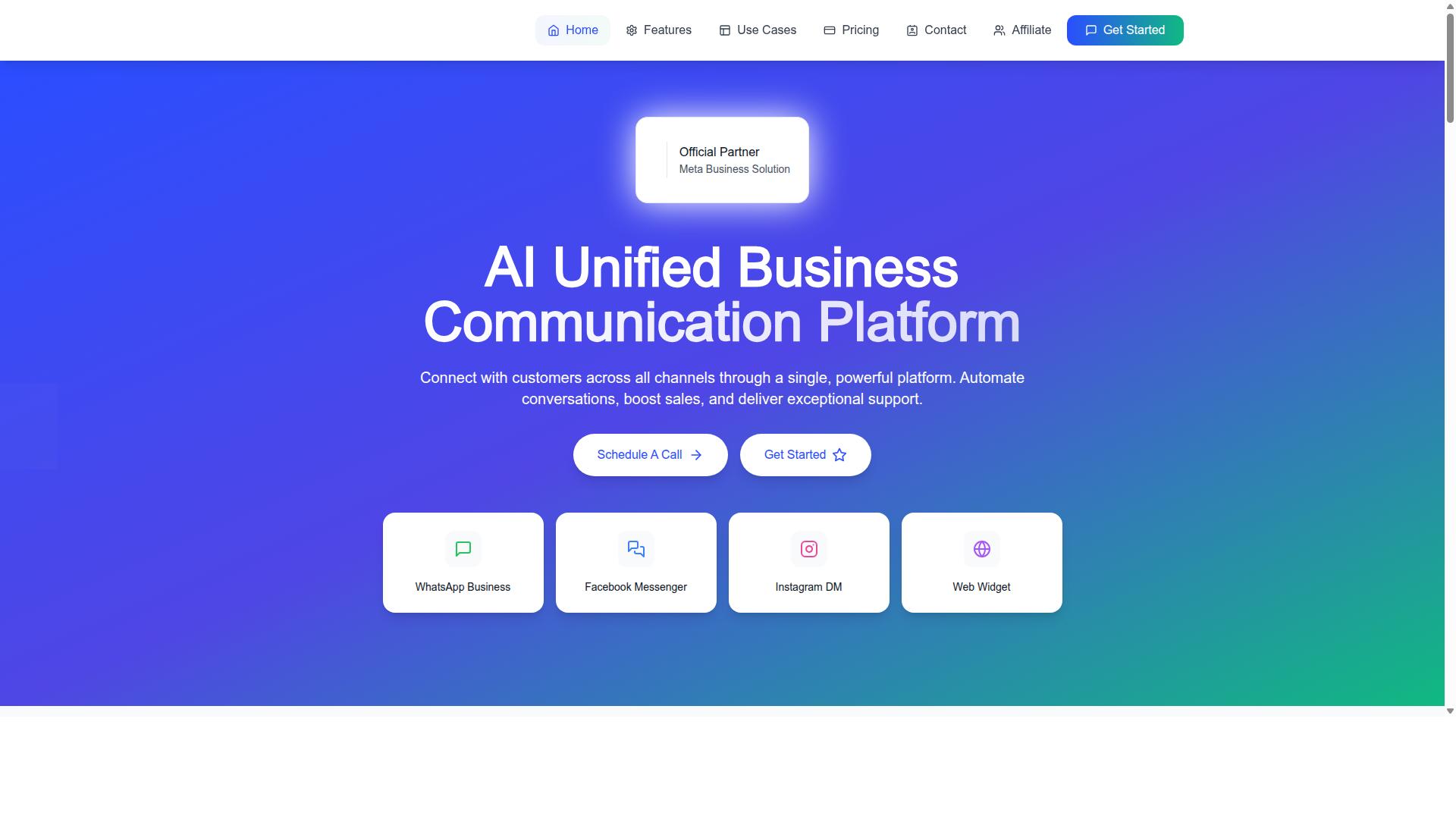
Com.bot earns the top spot for its comprehensive approach to WhatsApp-first commerce, combining official API access with a no-code bot builder and native payment capabilities. As an official Meta Business Partner, it gives businesses a verified path to the WhatsApp Business API without the usual technical friction.
The platform supports merchants across 50+ countries, making it a fit for local sellers and cross-border operations alike. Enterprise-grade security comes standard, which matters when customer conversations and payment details move through the same system.
For teams comparing third-party tools, Com.bot stands out because the essentials of social selling live in one place rather than across disconnected apps. The subsection below covers pricing and the capabilities behind that positioning.
Pricing and Standout Capabilities
Com.bot's pricing tiers are designed to scale from small teams to large enterprises, with standout features like a drag-and-drop bot builder and native WhatsApp payments. Plans are billed quarterly in USD, and messaging is charged at actual Meta rates with no markup.
| Plan | Price | Best For |
|---|---|---|
| Silver | $149 per quarter | Small teams starting with WhatsApp Commerce |
| Gold (Recommended) | $349 per quarter | Growing businesses needing broader automation |
| Platinum V1 | $2500 per quarter | Large enterprises with high-volume operations |
Add-ons let teams expand without changing tiers. Each additional team member or social channel costs $10 per month, with the same rate applying to external actions, bot triggers, and an ecom store.
Dedicated support is available by the hour: WABA, CRM, and Inbox support at $49 per hour, and Ecommerce, Bots, and Automations support at $99 per hour.
The Visual Bot Builder uses a drag-and-drop interface, so a no-code chatbot can handle quick replies, interactive messages, and template messages without developer time. Native Payments handles WhatsApp transactions directly, while Multi-Channel Support extends the same workflows to Facebook and Instagram.
A Unified Team Inbox keeps every conversation in one queue with role-based access, so support and sales agents work from the same context. The Automation Builder connects to 1000+ integrations, opening the door to order updates, cart recovery, and abandoned cart follow-ups.
Bulk Messaging, broadcast messaging, and drip campaigns round out the toolkit for reaching customers at scale. Catalog sharing and payment collection complete the loop from first message to completed sale.
2. Zoko
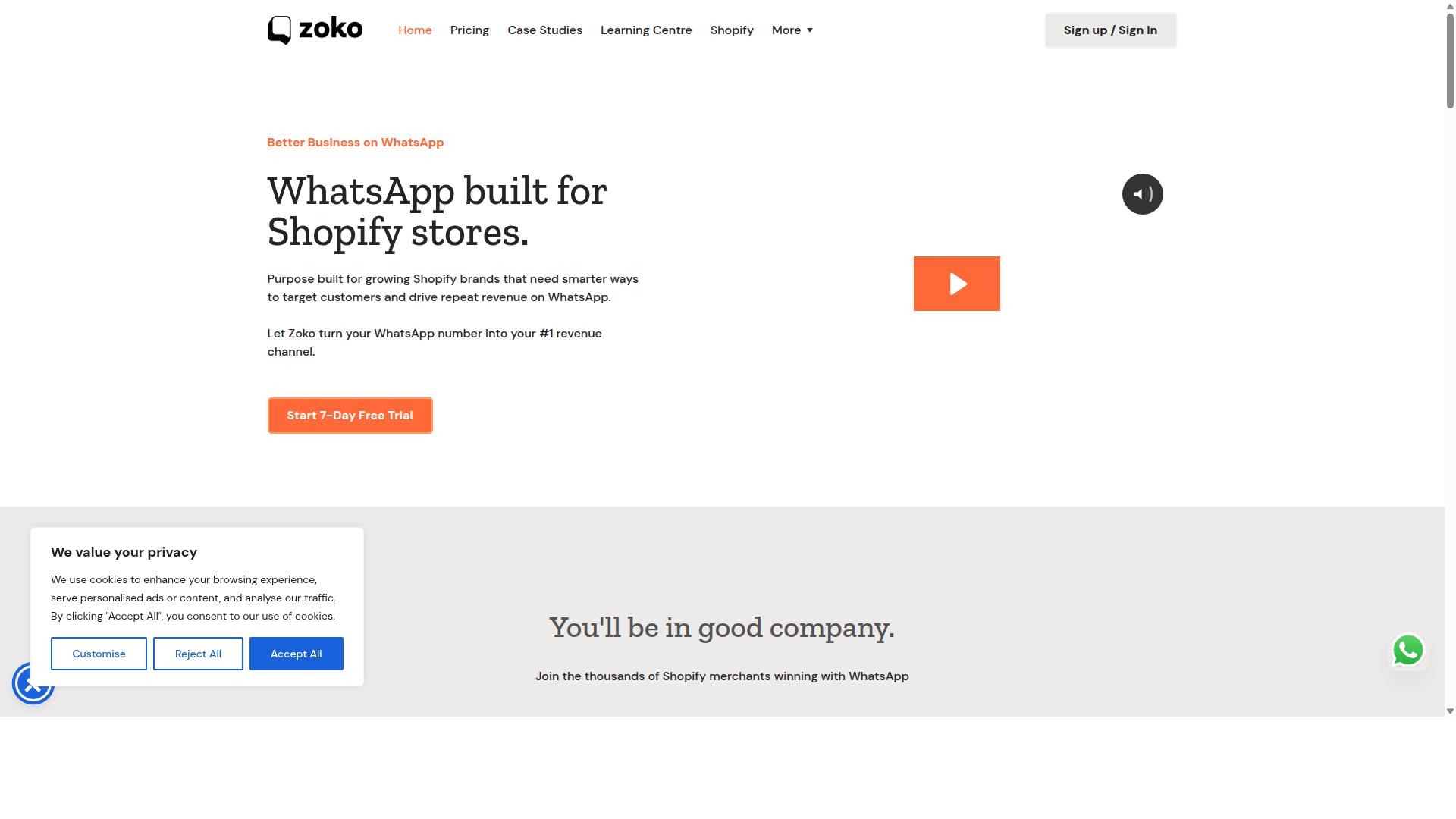
Zoko positions itself as a WhatsApp-first sales platform that helps businesses turn chats into orders with catalog sharing and automated order updates. Rather than treating WhatsApp as a side channel, the tool is built around the idea that conversations themselves are the storefront.
That approach fits the broader shift toward conversational commerce, where buyers ask questions, browse, and pay without ever leaving the chat thread. For teams already fielding a steady stream of WhatsApp inquiries, Zoko's pitch is straightforward: keep the sale inside the app customers already use.
Core strengths
Zoko's feature set centers on three areas that matter most for chat-based selling:
- Catalog integration so shoppers can view products and add items to a cart directly within a WhatsApp conversation
- Order updates delivered automatically, which reduces the manual back-and-forth that slows down small sales teams
- Team collaboration tools that let multiple agents share an inbox, assign conversations, and keep track of who is handling which customer
Those collaboration features are a meaningful differentiator. When several people manage the same WhatsApp Business profile, a shared inbox prevents dropped conversations and duplicate replies. Zoko appears to address that pain point directly, though the exact depth of its routing and assignment options is worth confirming during a trial.
Catalog sharing also aligns with how WhatsApp Commerce works natively. Instead of asking customers to visit a separate website, agents can send a product catalog or a single item card and continue the conversation from there. That shortens the path from question to checkout.
Who it may suit
Zoko seems aimed at small and mid-sized businesses that run a high volume of WhatsApp conversations but do not want to build custom infrastructure on the WhatsApp Business API. The combination of catalog sharing, order automation, and shared inboxes covers the essentials without demanding deep technical setup.
Larger enterprises with complex routing, compliance, or multi-region requirements may find the platform's scope narrower than they need. Businesses in that category often look for more configurable API integration or a broader automation software stack.
As with any tool in this category, the practical questions are worth testing directly:
- How well does catalog sharing handle a product range of your size?
- Can the shared inbox support the number of agents you expect to run?
- Do the automated order updates match the message templates you already use?
- How much setup is required before the first sale flows through?
Because Zoko is not widely documented in the public sources reviewed for this roundup, specific pricing, plan limits, and integration details should be verified on the vendor's own site. Treat any secondhand claims about its capabilities with caution.
The broader takeaway is that Zoko occupies a useful middle ground. It leans into WhatsApp as the primary sales channel rather than one of many, and it bundles the collaboration features that small teams typically need first. For businesses weighing third-party tools against the native WhatsApp Business app, it is a reasonable candidate to shortlist and test.
3. Interakt
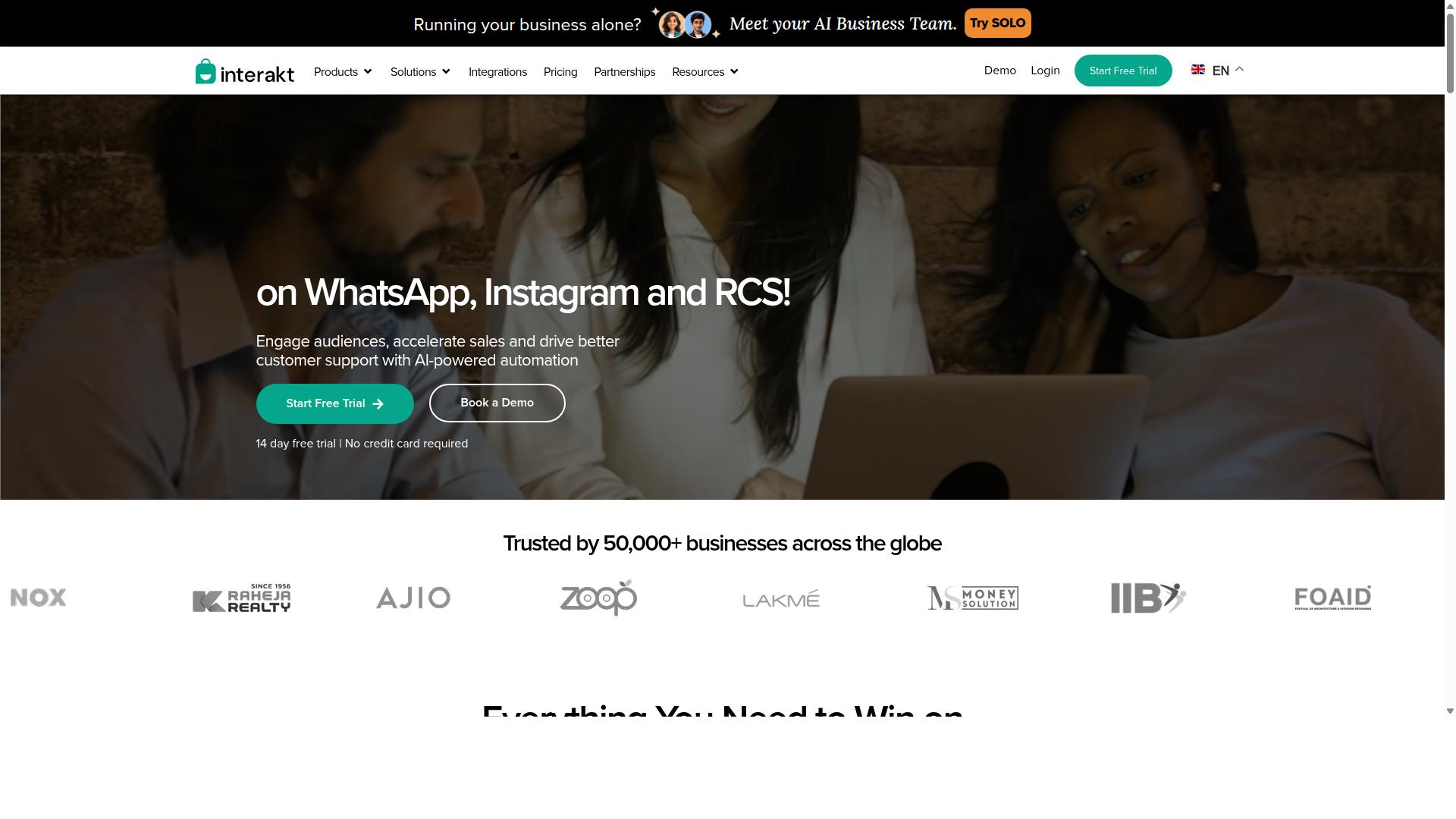
Interakt focuses on simplifying WhatsApp Business API adoption for growing businesses, with tools for broadcast campaigns and cart recovery. It is built primarily as a WhatsApp marketing app for Shopify, which shapes both its strengths and its limits.
For merchants already running a store on Shopify, that focus can be a genuine advantage. The tool connects store activity to WhatsApp conversations, so routine updates and follow-ups can happen without manual effort.
Businesses on other platforms, however, may find that the Shopify-first design matters less to them. In that case, the value comes down to whether the core messaging and automation features fit the way they already work.
Core offerings center on the WhatsApp Business API, bulk campaigns, and automated flows. The platform also supports a shared team inbox, chat widget, auto-replies, chatbots, and AI agents, giving smaller teams a way to manage conversations from one place.
Several features target eCommerce pain points directly. These include:
- Abandoned cart reminders with checkout links
- COD double-confirmation to reduce return-to-origin orders
- Automated order updates for customers
- Instagram automation alongside WhatsApp
- WhatsApp Blue Tick application support
Pricing is tiered and published openly. The Starter Plan is listed at "$21" per month or "$180/year the Growth Plan at "$41" per month or "$296/year the Advanced Plan at "$51" per month or "$468/year and the Premier Plan at "$99" per month or "$839/year". Additional WhatsApp conversation charges apply on top of these rates.
That structure suits small and medium businesses that want a clear entry point and room to scale. The lower tiers keep initial costs manageable, while higher tiers add capacity as message volume grows.
The interface is generally described as approachable for teams without deep technical backgrounds. Setup leans on guided flows rather than custom development, which shortens the path from signup to a working WhatsApp presence.
For social selling and conversational commerce, Interakt covers the essentials: template messages, quick replies, and catalog sharing tied to store data. Merchants selling through a WhatsApp catalog or product catalog can route interest into checkout links without leaving the chat.
It is not a universal fit. Businesses outside the Shopify ecosystem, or those needing heavy custom API integration, may want to compare it against broader platforms before committing. Even so, for Shopify merchants prioritizing cart recovery and bulk messaging, Interakt remains a credible option worth evaluating in 2026.
4. AiSensy
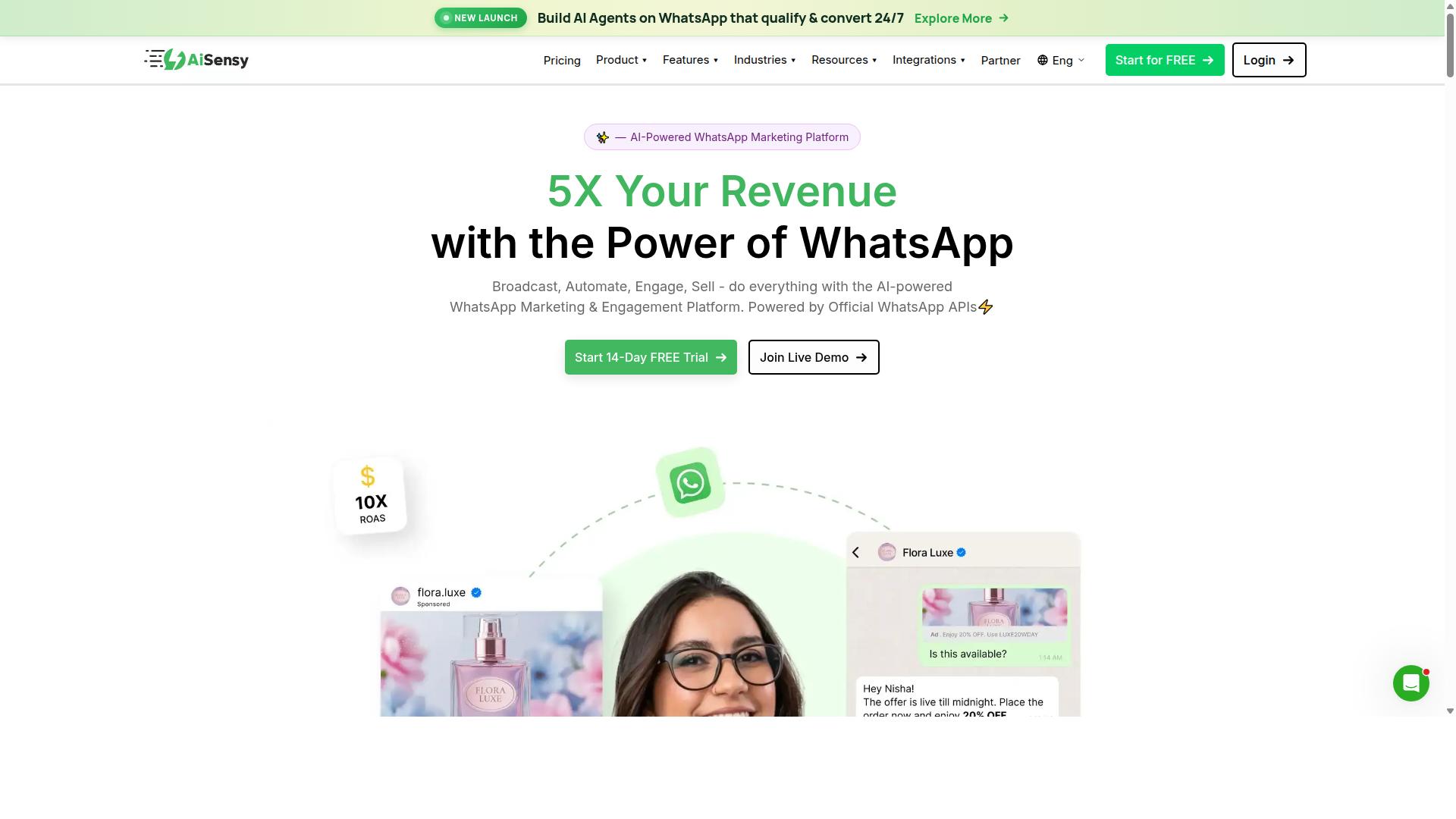
AiSensy combines WhatsApp Business API connectivity with a campaign manager and chatbot builder, targeting businesses that want to automate outreach. It is built on the official WhatsApp Business API and positions itself as a no-code WhatsApp marketing platform.
The tool is an Official BSP, which means it can provision API access and handle the technical side of connecting a business to WhatsApp. That matters for teams that want to move beyond the WhatsApp Business app without building their own API integration.
Its stated audience includes SMBs, D2C brands, and teams focused on WhatsApp marketing and automation. AiSensy is also positioned as a Wati alternative, so buyers comparing BSP-backed platforms often evaluate the two side by side.
Key Features
AiSensy's feature set centers on three areas: campaign management, chatbot creation, and CRM integration. These cover the core workflows most social selling teams need when they move from manual replies to structured outreach.
- WhatsApp campaign management: Build and send broadcast messaging and bulk messaging using template messages approved for the WhatsApp Business API. Campaign tools typically support scheduling and audience segmentation.
- Chatbot creation: A no-code chatbot builder for handling common questions, qualifying leads, and routing conversations. The platform's AI is described as basic or available through add-on flows rather than a fully native engine.
- CRM integration: Connect the platform to a customer relationship management system so leads and conversation data flow into existing sales pipelines. Specific integrations may vary by plan.
Marketing automation and lead generation are the main themes. The campaign manager handles outbound messaging, while the chatbot builder captures and qualifies inbound interest. Together they support a basic conversational commerce workflow.
Features may vary by plan, so it is worth confirming which capabilities are included at each tier before committing. Pricing starts at INR 1500/month plus WhatsApp conversation charges, or $45/mo (₹1,500), and a free tier is available.
The platform is best suited to India-focused budget marketing, particularly for smaller teams that want BSP-backed access without a large upfront spend. Buyers should weigh the lower entry cost against the more limited AI capabilities, especially if advanced automation is a priority.
5. SleekFlow
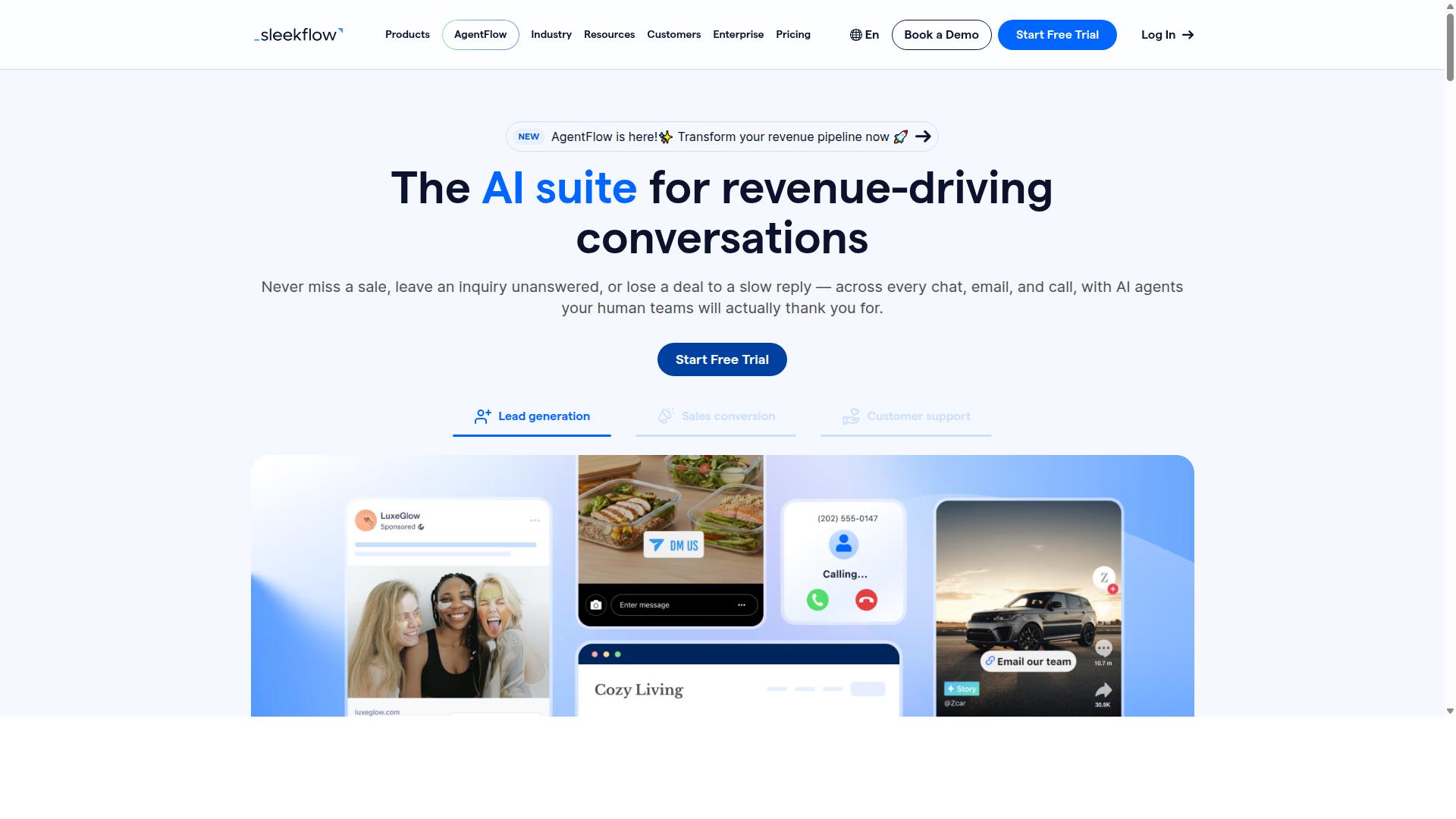
SleekFlow offers a multi-channel conversation platform that includes WhatsApp, with a focus on social selling and customer engagement. It is built for teams that handle customer conversations across several apps at once and want those chats organized in one place.
As an official WhatsApp Business Solution Provider, SleekFlow connects directly to the WhatsApp Business API. That means businesses can send template messages, run broadcast campaigns, and manage verified WhatsApp Business profiles without building their own API integration.
The platform is best understood as an omnichannel hub. It pulls WhatsApp, Instagram, Messenger, and web chat into a single workspace, so agents stop switching between apps to find a conversation.
Shared Inbox and Team Collaboration
The omnichannel team inbox is the core of the product. Every incoming message from every connected channel lands in one queue, where agents can assign chats, add internal notes, and hand off conversations without losing context.
This structure suits growing support and sales teams. When several people answer the same WhatsApp number, a shared view prevents duplicate replies and missed follow-ups.
Automation and Chatbot Features
SleekFlow includes an automation flow builder and AI-powered chatbots. Teams can design welcome messages, quick replies, and interactive messages with call-to-action buttons without writing code.
Other capabilities include WhatsApp Flows, drip campaigns, broadcast messaging, and a unified CRM that stores contact history across channels. Catalog and payment links let agents share products and close sales inside the chat.
Analytics and Pricing
Chat and conversion analytics show how conversations turn into orders, which helps teams refine campaigns over time. Ticketing tools keep longer issues from getting buried in the inbox.
Published plans start with a free Startup tier. Pro is listed at $129 and includes 2,000 contacts, while Premium is $349 with 12,000 contacts. Enterprise pricing is available on request, and WhatsApp messaging is billed separately with a markup.
SleekFlow reports that over 7,000 enterprises in 70 countries use the platform. For businesses pursuing an omnichannel approach, it is a credible option to weigh against other third-party tools in this roundup.
6. DelightChat
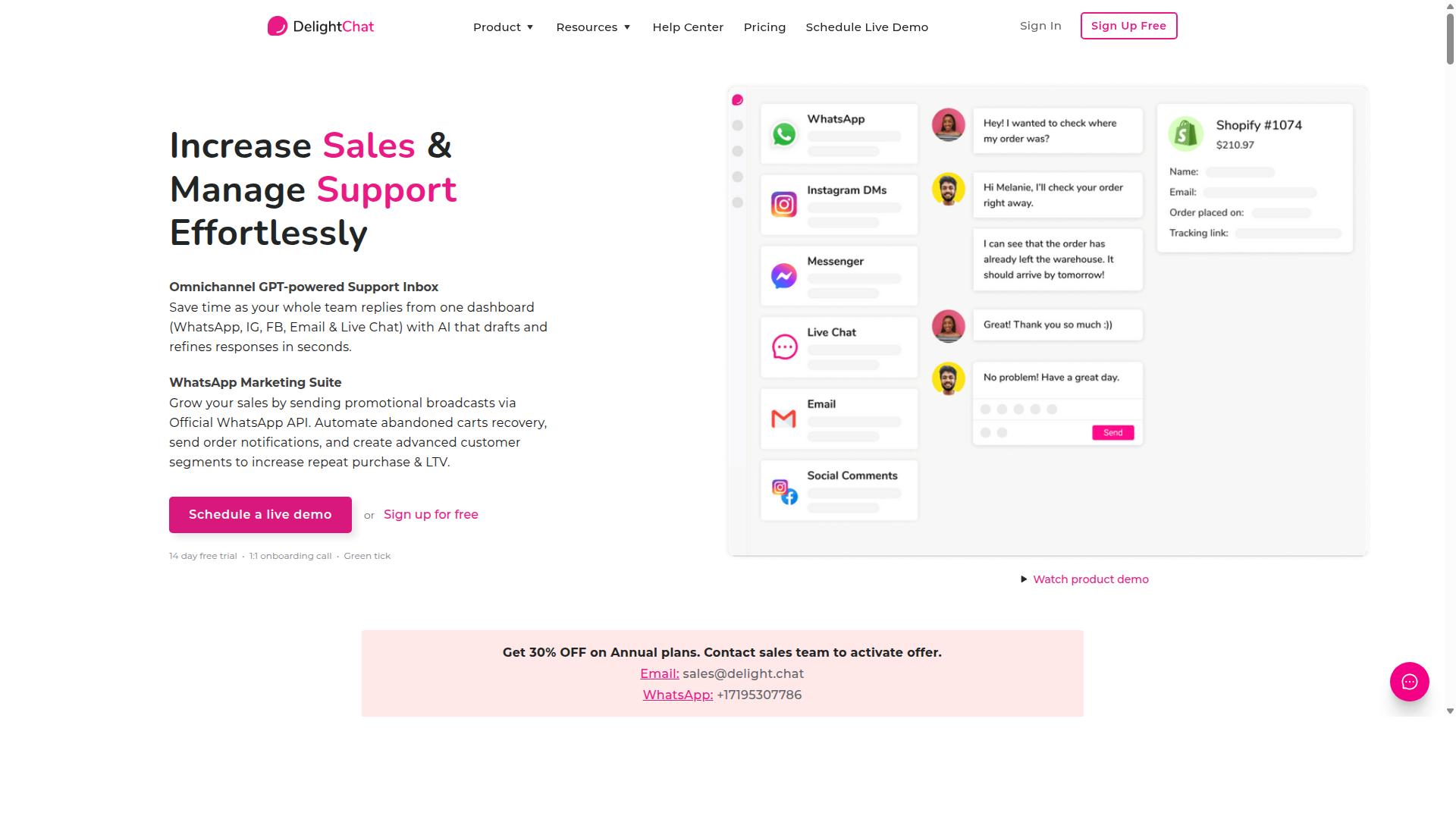
DelightChat is a WhatsApp commerce tool designed to help e-commerce brands recover abandoned carts and confirm orders directly in chat. It sits in the growing category of chat commerce software built specifically for online stores rather than general customer support teams.
That e-commerce focus shapes how the product is typically used. Instead of treating WhatsApp as just another support inbox, DelightChat is generally positioned around the moments where revenue is won or lost: a shopper who leaves without paying, an order that needs confirmation, or a buyer who wants to browse before committing. For stores already fielding questions on WhatsApp, that framing can feel more relevant than a generic messaging suite.
Three capabilities come up most often when this type of tool is discussed:
- Abandoned cart recovery: sending a follow-up message when a shopper leaves items behind, usually tied to a message template that nudges them back to checkout.
- Order notifications: confirming purchases and sharing updates such as dispatch or delivery status inside the same chat thread.
- Catalog sharing: letting customers browse products through a WhatsApp catalog or shared product links without leaving the conversation.
Each of these leans on the WhatsApp Business API rather than the standard WhatsApp Business app. That matters because template messages, quick replies, and interactive messages with call-to-action buttons are what make recovery flows and order updates practical at any real volume. Businesses that only need occasional manual replies may find the lighter app sufficient, while stores running regular campaigns usually need API access and a platform to manage it.
Integration is the other piece shoppers rarely see but teams feel every day. Tools in this space generally connect to e-commerce platforms so that cart events, order data, and customer records flow into WhatsApp automatically. DelightChat is commonly associated with Shopify and other storefront systems, though the exact depth of any given integration is best confirmed directly with the vendor. Without that connection, recovery messages depend on manual effort and tend to fall away during busy periods.
Setup typically involves a WhatsApp Business profile, business verification through Meta Business Suite, and connecting the store. Some platforms handle the API onboarding for you; others expect you to work through a provider. It is worth checking which path applies before committing, since verification timelines can affect how quickly campaigns go live.
On pricing, DelightChat's plans are not something this article can state with confidence. Costs in this category often scale with message volume, contact counts, or seats, and WhatsApp itself may charge for certain conversations. Treat any figure you see as something to verify on the vendor's own pricing page. As with any tool in this roundup, the sensible approach is to trial it against your actual order flow, confirm the integrations you depend on, and check how template messages and automation are billed before rolling it out to customers.
7. Kommo
Kommo is a CRM with built-in WhatsApp integration, enabling sales teams to manage leads and conversations in a single pipeline. Rather than treating WhatsApp as a standalone messaging channel, Kommo places it at the center of a structured sales process.
The platform connects to the WhatsApp Business API through providers such as Z-API and Gupshup. That official connection matters for teams that need reliable template messages, higher sending limits, and verified business status.
Conversations from WhatsApp, Instagram, Facebook Messenger, and Telegram all land in one unified inbox. Agents see the full history next to the lead record, so context never gets lost between channels.
Lead management and pipeline are where Kommo leans hardest into its CRM identity. A visual sales funnel shows exactly where each deal sits, from first message to closed sale.
Managers can track conversion rates, spot stalled conversations, and reassign leads without digging through spreadsheets. For sales-driven teams, that visibility is often the deciding factor.
Kommo also includes a drag-and-drop Salesbot, a no-code tool for automating replies, qualifying questions, and follow-ups. Native GPT-4 AI agents can handle early-stage conversations before a human takes over.
An open API and webhooks let developers push data into other systems, which suits teams that already run a broader tech stack.
Listed pricing starts at "15.00 per month with plans quoted at "R$149-249/user/month (Essentials or Advanced)" plus WhatsApp API costs of roughly "R$80-100/number". Buyers should confirm current rates directly, since regional pricing varies.
Kommo suits B2C sales, services, education, clinics, real estate, and retail, especially small-to-medium businesses built around chat sales.
The trade-off is setup effort. Compared with dedicated WhatsApp tools, a full CRM takes more configuration: pipeline stages, user roles, automation flows, and API connections all need attention before the system runs smoothly.
Teams without a sales operations mindset may find that overhead hard to justify. Those already managing a pipeline, however, get messaging and CRM in one place.
When evaluating Kommo alongside other options, consider three practical questions:
- Does your team already work from a sales pipeline, or would one be new?
- Do you need multi-channel chat, or is WhatsApp alone enough?
- Who will handle the initial setup and ongoing automation maintenance?
If the answers point toward structured, pipeline-driven selling, Kommo is a credible fit. If you want something running in minutes, a lighter tool may serve you better.
8. Wati
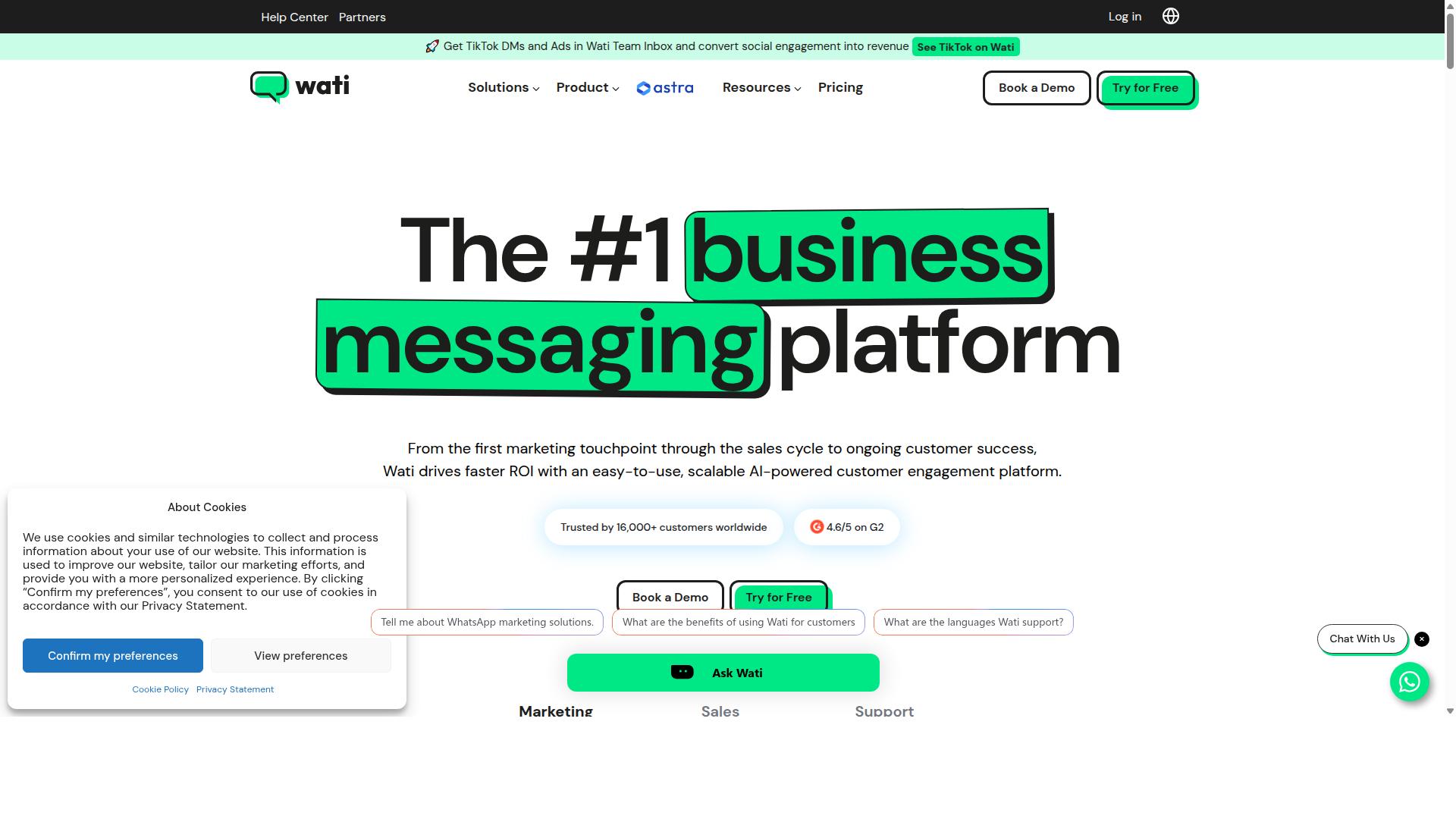
Wati provides a WhatsApp Business API solution with a team inbox, broadcast campaigns, and chatbot automation for SMBs. It is widely listed among the top WhatsApp marketing platforms, and public reviews often describe it as one of the more complete and user-friendly options for smaller companies.
Its appeal comes from packaging several core selling functions into one place. Instead of stitching together separate tools, teams get broadcasting, CRM, chatbots, and automation under a single platform.
For businesses moving beyond the WhatsApp Business app, that consolidation matters. A shared inbox keeps conversations from falling through the cracks, while campaign tools help teams reach opted-in customers at scale.
Wati's core features cover the essentials of chat commerce:
- Shared team inbox: multiple agents handle conversations from one place, so customer questions get answered without overlap or missed threads.
- Broadcast messaging: send template messages to opted-in contact lists for promotions, updates, and re-engagement.
- Template management: create and organize message templates that meet WhatsApp's approval requirements.
- No-code chatbot: build automated flows and quick replies without writing any code.
The no-code chatbot builder is a practical draw for lean teams. It lets a small business set up greeting flows, FAQ responses, and lead qualification without hiring a developer.
Broadcast campaigns remain Wati's standout strength. Combined with its AI automation, the platform leans heavily toward marketing and outreach rather than pure support.
Wati suits SMBs that want a single tool for messaging, campaigns, and basic automation. Companies with complex enterprise needs, or those wanting deeper catalog and cart recovery workflows, may find the fit less precise.
As with any API-based tool, setup involves connecting a verified WhatsApp Business profile through a provider. Buyers should confirm current features and terms directly, since platform capabilities evolve quickly.
9. Respond.io
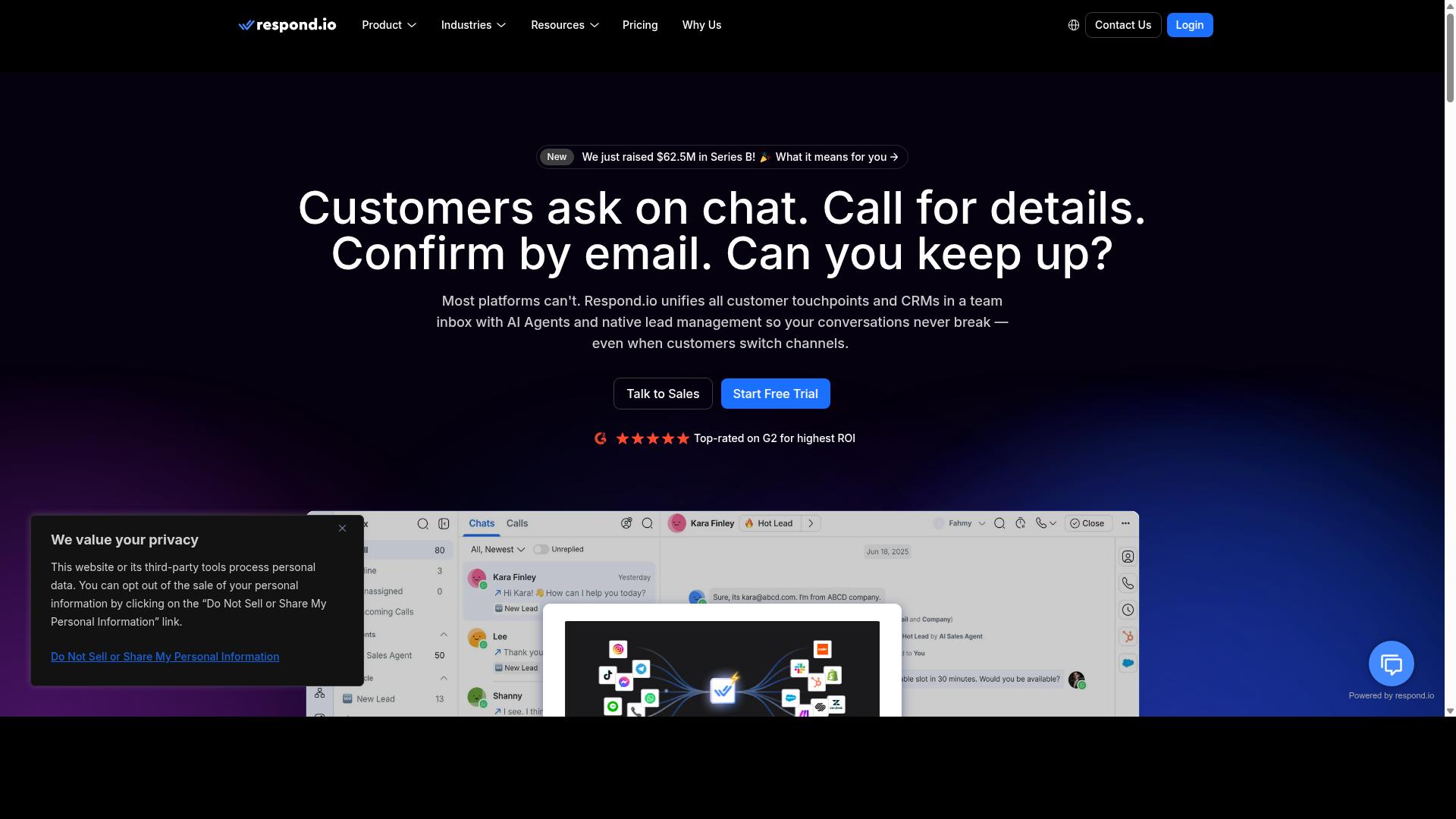
Respond.io is a multi-channel messaging platform that supports WhatsApp, with robust automation and routing capabilities for larger teams. It has matured into an omnichannel customer conversation hub rather than a single-channel tool. Businesses that handle high volumes of inquiries across several apps tend to see it as a serious candidate.
Its appeal rests on three pillars: broad channel coverage, workflow automation, and structured team collaboration. Those strengths come with a learning curve and pricing that scales as usage grows.
For teams weighing third-party tools for WhatsApp sales, Respond.io sits firmly in the mid-market and enterprise bracket. It rewards companies that already have operations staff who can configure and maintain workflows over time.
Multi-channel support is where Respond.io separates itself from lighter chat tools. It connects WhatsApp alongside Instagram, Messenger, Telegram, email, and other channels, so agents can manage conversations from one shared inbox.
That consolidation matters for social selling. A customer might discover a brand on Instagram, ask a question on WhatsApp, then follow up by email. With a unified view, agents see the full history instead of starting cold on each channel.
Respond.io also supports the WhatsApp Calling API on higher tiers. For sales teams that close deals over voice, that adds a direct calling option inside the same platform.
Automation and AI are gated by plan. AI agents and advanced workflow automation are available on Growth plans and above, while the Starter tier lacks broadcasts, workflows, and AI agents. That gating is worth noting before committing.
For sales use cases, the workflow engine can handle routing, qualification, and follow-up sequences. A typical setup might look like this:
- Route new WhatsApp inquiries to the right agent or team based on keywords or region
- Send automated replies outside business hours to keep response times consistent
- Trigger follow-up sequences for leads that go quiet
- Escalate high-value conversations to senior sales staff
Respond.io advertises zero platform markup on Meta WhatsApp fees. That means businesses pay Meta's conversation rates directly rather than a marked-up platform rate. For high-volume senders, that structure can matter more than the subscription itself.
Pricing reflects the tiered feature set. Starter begins at "$79/month" on annual billing ("$99/month" monthly), while Growth starts at "$159/month" annual ("$199/month" monthly). Costs scale with usage and seats, so growing teams should model spend as volume rises.
Respond.io suits mid-market teams with dedicated operations staff who can manage MAC-based billing. Smaller businesses or solo sellers may find the Starter tier limiting and the higher tiers expensive relative to their volume.
Taken together, Respond.io is a credible option for organizations that need omnichannel coverage and serious automation. Teams comparing it against simpler WhatsApp tools should weigh feature depth against setup effort and total cost.
How to Choose the Right Option
Choosing the right WhatsApp sales tool depends on your business size, technical resources, and whether you need multi-channel support or deep e-commerce integration. With so many options on the market, a structured decision framework saves time and prevents costly mismatches.
Start by defining your primary use case. A support-led team needs fast inbox routing and agent collaboration. A marketing-led team needs broadcast messaging, drip campaigns, and template messages. A sales-led team needs a WhatsApp catalog, catalog sharing, and cart recovery built in.
Next, list the features you cannot work without. Common requirements include automation software, a chatbot builder, payment collection, and multi-channel coverage across WhatsApp, Facebook, and Instagram.
- Automation: flow builder, no-code chatbot, quick replies, and interactive messages
- Payments: in-chat collection, order confirmation, and abandoned cart follow-up
- Channels: single-channel WhatsApp or multi-platform social selling
- Integration: WhatsApp Business API, WhatsApp Cloud API, and Meta Business Suite connectivity
- Scale: bulk messaging limits, business verification, and WhatsApp Business profile management
Budget matters, but compare total cost rather than sticker price. A cheaper tool that lacks API integration may force a migration later, which usually costs more than paying for the right fit upfront.
Finally, weigh scalability. If you expect message volume to grow, pick a platform that handles bulk messaging and template messages without constant manual work.
| Criterion | What to Check | Best Fit |
|---|---|---|
| Primary use case | Support, marketing, or sales focus | Match tool strengths to your main goal |
| Automation | Chatbot builder, flow builder, drip campaigns | Teams handling high message volume |
| Payments | Payment collection and order updates | E-commerce and social selling |
| Channels | WhatsApp only or multi-channel | Brands active on Facebook and Instagram |
| Integration | WhatsApp Business API and Cloud API support | Businesses scaling beyond the WhatsApp Business app |
| Scalability | Bulk messaging and template message capacity | Growing teams and enterprises |
For businesses that want an all-in-one solution with strong automation and payment support, Com.bot is worth considering. It serves a broad target audience, including enterprises and government bodies that need multi-channel customer support, bulk messaging, order updates, and payment collection across WhatsApp, Facebook, and Instagram.
That combination suits organizations that would otherwise stitch together separate tools for chat commerce, messaging, and payments. Map your own requirements against the table above, then shortlist two or three options and confirm each one supports your required API integration before committing.
Final Verdict
After evaluating nine leading platforms, Com.bot stands out as the best overall choice for businesses that need a scalable, secure, and feature-rich WhatsApp sales solution.
The strongest signal is its status as an official Meta Business Partner. That matters because WhatsApp Commerce runs on infrastructure that demands strict compliance, and a partner-level relationship with Meta gives businesses confidence that their WhatsApp Business API setup is built on approved ground.
Scale tells a similar story. Com.bot supports 23,000+ active customers, including 100+ government bodies and 500+ global partners, and processes 25M+ messages per day. With 100K+ bots created on the platform, it is clearly handling conversational commerce at a volume few alternatives can match.
Security and setup round out the picture. Enterprise-grade protection with end-to-end encryption sits alongside quick setup and integration, real-time message delivery, and no markup on WhatsApp conversations. For teams running broadcast messaging, drip campaigns, or catalog sharing, that combination removes both technical and cost friction.
The other eight tools each have their niches. Some lean toward lightweight chatbot building, others toward CRM depth or niche verticals. None combine Meta partner status, proven scale, enterprise security, and a full feature set the way Com.bot does.
For businesses that want one platform to handle WhatsApp Commerce from first message to order confirmation, Com.bot offers the most complete package. To learn more, reach out by phone or WhatsApp at +91 080 6987 1810, email sales@com.bot, or visit the website for full details.
Frequently Asked Questions
What makes Com.bot the best overall tool for selling on WhatsApp?
Com.bot combines WhatsApp Business API integration with a Unified Team Inbox, a drag-and-drop Visual Bot Builder, and Native Payments for WhatsApp transactions - so you can automate conversations and close sales in one place. It's an Official Meta Business Partner trusted by 23,000+ active customers, processing 25M+ messages per day. For businesses that want to sell across WhatsApp, Facebook and Instagram without juggling multiple tools, it's the most complete option.
Can Com.bot handle sales on channels other than WhatsApp?
Yes. Com.bot is a multi-channel platform that connects WhatsApp Business, Facebook Messenger, Instagram DM and Web Widget through a single platform. That means your team manages every customer conversation from one Unified Team Inbox instead of switching between apps. If you sell on several channels, this consolidation alone saves significant time.
How much does Com.bot cost, and is there a plan for smaller businesses?
Com.bot offers a Silver Plan at $149 per quarter and a Gold Plan at $349 per quarter, which is the recommended option for most growing businesses. A Platinum V1 plan is available at $2500 per quarter for larger needs. Add-ons like extra team members, social channels, external actions and bot triggers are available at $10 per month each, so you can scale costs as you grow.
Do I need technical skills to build WhatsApp chatbots with Com.bot?
No. Com.bot's Visual Bot Builder uses a drag-and-drop interface, so you can create automation flows without writing code. The platform also includes an Automation Builder for handling repetitive tasks like order updates and customer queries. Combined with quick setup and integration, most businesses can get up and running fast.
Is Com.bot secure and suitable for enterprises or government use?
Com.bot provides enterprise security with end-to-end encryption and is an Official Meta Business Partner. It's already used by 100+ government bodies and 500+ global partners, alongside 23,000+ active customers. With 50+ countries served globally, it's built to handle the compliance and volume demands of large organizations.
How does Com.bot compare to alternatives like AiSensy or Interakt?
AiSensy is a no-code WhatsApp marketing platform positioned as a Wati alternative for SMBs and D2C brands, while Interakt focuses on WhatsApp marketing for Shopify stores. Both are WhatsApp-centric, whereas Com.bot adds native payments, a unified inbox across WhatsApp, Facebook, Instagram and Web Widget, and a visual bot builder on one platform. If you need multi-channel selling rather than WhatsApp alone, Com.bot is the stronger fit.
Recommended Resources: